The most consequential constraint in nephrology and urology device adoption is often not whether a technology works, but whether it can be executed repeatedly across real-world settings. Home-adjacent dialysis models and high-throughput outpatient urology both expose the same underlying fragility: workflows that depend on expert users, perfect setup, or brittle supply chains do not scale reliably. As a result, the market’s next phase is likely to reward devices designed around operational resilience rather than peak-spec performance.
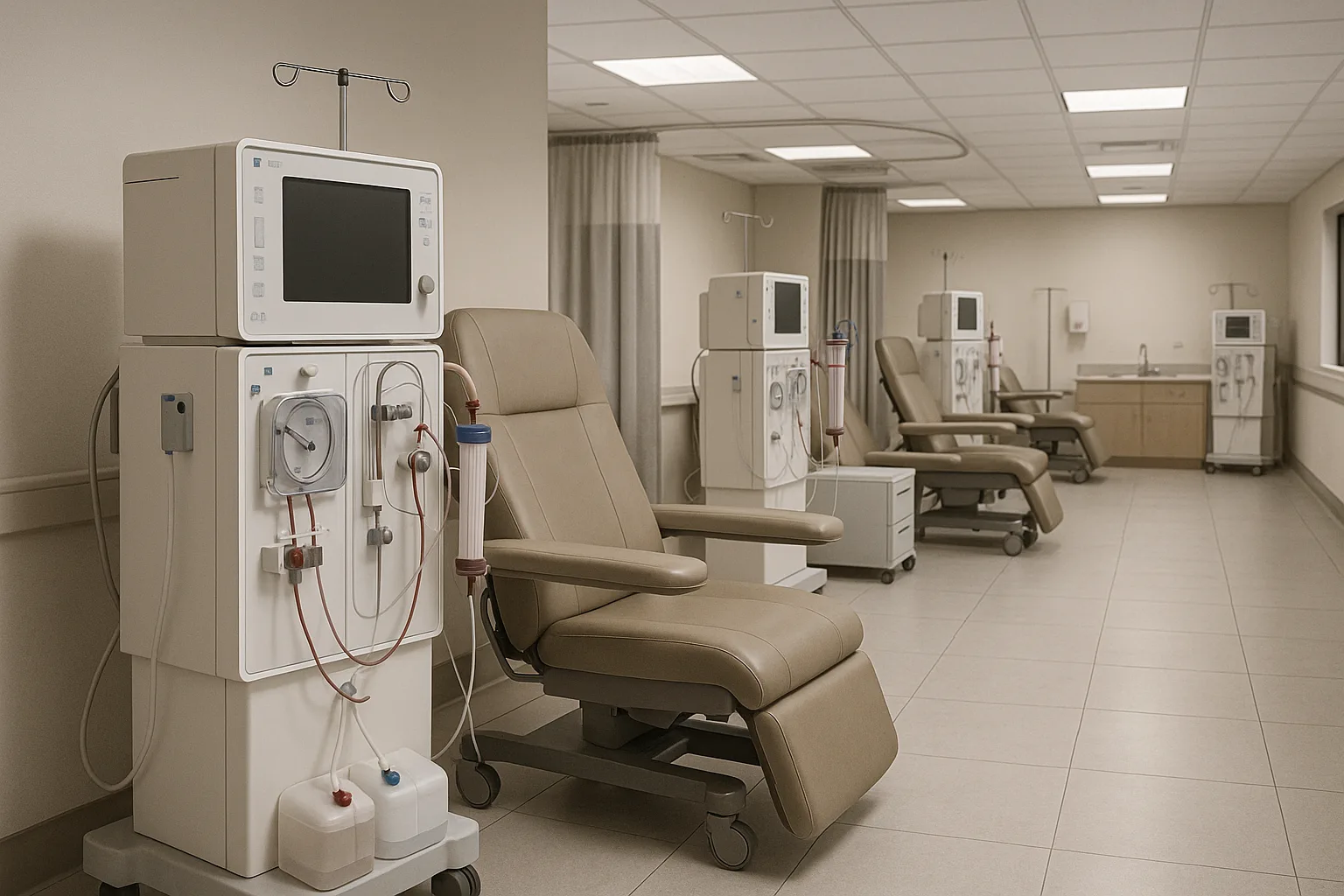
In dialysis, scale is likely to be determined by how effectively a system reduces cognitive load, compresses training time, and limits the number of steps where user error can occur. That pushes innovation toward guided setup, automation of routine actions, clear exception handling, and consumable designs that are difficult to misconfigure. The commercial implication is that a vendor’s implementation playbook—training, onboarding, remote support, and ongoing competency maintenance—can become as important as the device itself, because it’s the mechanism that converts capability into sustained utilization.
Connectivity can help, but only when it is tied to a concrete operational outcome: fewer manual documentation tasks, earlier detection of issues, faster service dispatch, improved inventory planning, or more consistent quality monitoring. Providers are likely to resist “data exhaust” that does not reduce labor or risk. The winners will be those who can translate device data into workflows that supervisors, biomedical engineering teams, and supply-chain leaders can act on without building bespoke infrastructure around every deployment.
Urology is seeing parallel dynamics, especially in settings where procedure volume is high and reprocessing capacity is constrained. Facilities may gravitate toward approaches that simplify turnover, standardize imaging/visualization setups, and reduce variability between rooms and clinicians. This does not automatically mean “disposable everything,” but it does suggest that the total system—including reprocessing, storage, and consistent readiness—will be evaluated as one workflow. Vendors that can make room-to-room replication straightforward (training, checklists, standardized kits, predictable maintenance) are likely to become default choices in multi-site networks.
Procurement teams are also likely to broaden how they define value. A device that looks more expensive on a unit-price basis can still win if it measurably reduces staff time per treatment or procedure, shrinks downtime, or lowers the operational risk of missed steps. Conversely, products that require intensive super-user support may struggle in environments with turnover and limited training bandwidth. Over time, expect more contracting structures that align payment to uptime, service responsiveness, consumable reliability, and measurable workflow performance—not just capital equipment delivery.
The strategic takeaway is that “scale” is an engineering and operating-model problem at least as much as it is a clinical one. Companies that integrate human-factors design, dependable supply, enterprise integration, and service operations into one coherent offer are better positioned to expand in both dialysis and outpatient urology, especially as health systems push more care into distributed settings.