MedInsightHealthcare Market Intelligence
AI-Based Stroke Detection & Triage Platforms Market

AI-Based Stroke Detection & Triage Platforms Market Size, Share & Forecast 2026-2036

Key Market Insight

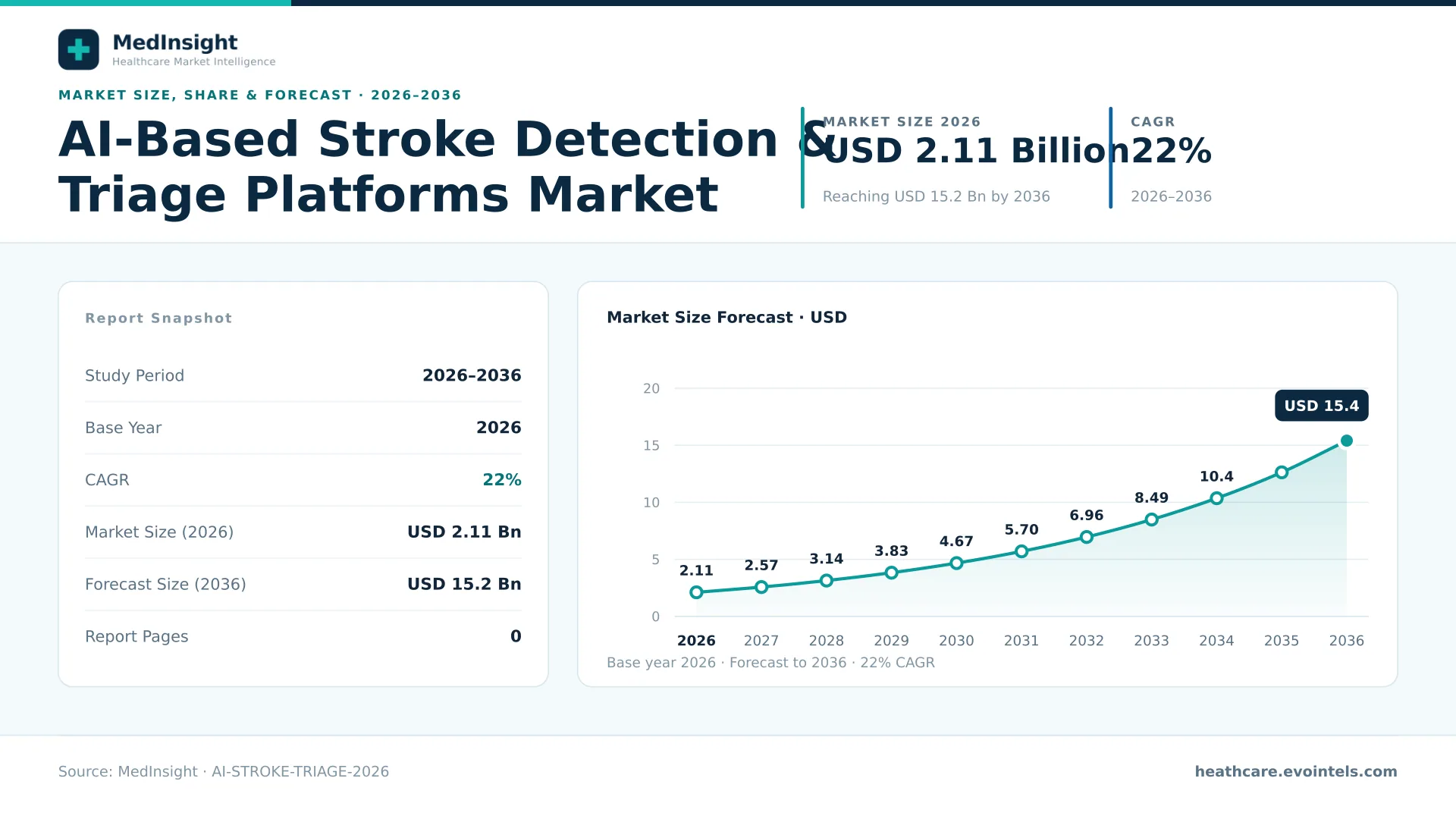
The AI-Based Stroke Detection & Triage Platforms Market was valued at USD 2.11 Billion in 2026 and is projected to reach USD 15.19 Billion by 2036, expanding at a CAGR of 22% during the forecast period.

  • Base Year 2026
  • Forecast 2026-2036
  • 5 Regions

Market Size (2026)

USD 2.11 Billion

CAGR

22%

Forecast Value (2036)

USD 15.19 Billion

AI-Based Stroke Detection & Triage Platforms Market

22%CAGR

AI-Based Stroke Detection & Triage Platforms Market report contents

Report Scope

Coverage, study period and deliverables

AI-Based Stroke Detection & Triage Platforms Market report scope
Study Period2026-2036
Historical Period2019-2025
Market Size (2026)USD 2.11 Billion
Forecast Value (2036)USD 15.19 Billion
CAGR22%
Largest MarketNorth America
Fastest Growing MarketAsia Pacific
Regions Covered5
Segments5
Companies Profiled6

Market Overview

2026 baseline and 2026-2036 forecast

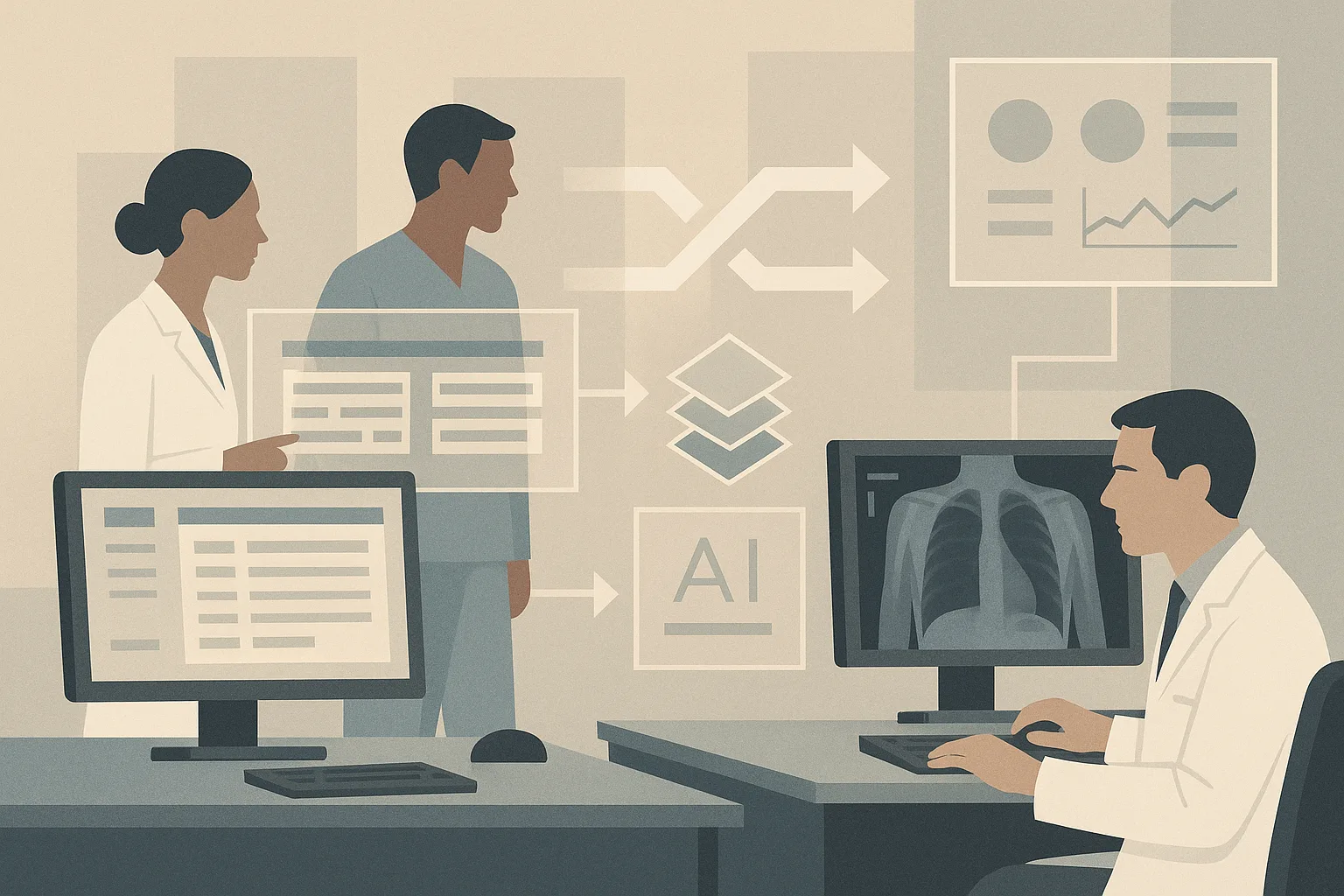
AI-based stroke detection and triage platforms use artificial intelligence and machine learning to analyze stroke-related imaging and support rapid clinical communication. Common functions include detection of suspected large-vessel occlusion, assessment of brain imaging, automated scoring or prioritization, notification of neurovascular teams and coordination of time-sensitive treatment workflows. WHO reported 11.9 million new strokes and 93.8 million people living with stroke globally in 2021. FDA's 2018 authorization of Viz.AI Contact established a U.S. regulatory precedent for software that analyzes CT images and alerts specialists when a suspected large-vessel blockage is identified. The broader AI-powered acute stroke triage market was estimated at USD 2.11 billion in 2026 with a 22% CAGR to 2030; this report uses that estimate as a quantitative benchmark rather than representing it as a narrow platform-specific market size.

AI-Based Stroke Detection & Triage Platforms Market Size, CAGR and Forecast, 2026–2036

Report Description

What this report covers

The AI-Based Stroke Detection & Triage Platforms Market report examines software platforms that use artificial intelligence to identify stroke-related imaging findings and accelerate emergency triage and specialist notification.

The report evaluates market drivers, restraints, opportunities, challenges, technology trends, industry developments, segmentation, regional dynamics, competitive positioning and regulatory requirements.

The analysis focuses on large-vessel occlusion detection, multimodal stroke imaging, workflow orchestration, emergency communication, telestroke integration and emerging prehospital applications.

Key Market Insights

Headline findings from the analysis

  1. 1Large-vessel occlusion detection is a central use case because rapid identification can accelerate specialist notification and thrombectomy pathways.
  2. 2Modern platforms increasingly combine imaging analysis with workflow orchestration, allowing alerts, case prioritization and communication across emergency, radiology and neurovascular teams.
  3. 3Clinical evidence supports high diagnostic performance for AI-assisted LVO detection, but performance varies by occlusion location, imaging modality and clinical setting.
  4. 4Regulatory clearances for radiological computer-assisted triage and notification software have created an established pathway for commercial deployment.
  5. 5North America remains the leading regional market, while Asia Pacific offers substantial growth potential as stroke burden, advanced imaging infrastructure and digital-health adoption expand.

Market Dynamics

Drivers, restraints, opportunities and challenges shaping the market

Growth Drivers

  • The high clinical importance of time-to-treatment creates demand for technologies that can accelerate imaging interpretation, notification and specialist coordination.
  • Growing stroke incidence and persistent global stroke burden increase demand for scalable diagnostic and triage infrastructure.
  • Expansion of CT, CTA and CT-perfusion capabilities creates a larger technical environment for AI-based image analysis.
  • Telestroke and hub-and-spoke care models increase the value of automated alerts and remote case prioritization.
  • Regulatory clearances and growing clinical evidence are improving provider confidence in AI-assisted stroke workflows.

Restraints

  • AI performance can vary across hospitals, scanners, imaging protocols, patient populations and types of vascular occlusion.
  • Platforms require integration with PACS, radiology workflows, electronic systems and communication infrastructure, which can create implementation costs.
  • Healthcare organizations may require substantial clinical validation and governance before allowing AI alerts to influence emergency workflows.
  • Reimbursement and procurement models for AI-enabled clinical decision-support tools remain variable across healthcare systems.

Opportunities

  • Expansion from LVO detection into broader stroke imaging assessment can increase the clinical and commercial value of integrated platforms.
  • Prehospital and mobile-stroke applications may allow AI to support earlier triage before hospital arrival, although prospective validation remains important.
  • Integration with telestroke networks can extend advanced triage capabilities to hospitals without on-site neurovascular specialists.
  • AI-assisted treatment selection and outcome prediction represent longer-term opportunities as clinical evidence and regulatory pathways mature.

Challenges

  • Reducing false-positive alerts without missing clinically important occlusions is critical because unnecessary activations can burden emergency stroke teams.
  • Differences between development datasets and real-world populations can create generalization and bias concerns.
  • Clinical workflows must clearly define how AI outputs are reviewed and how disagreements between software and clinicians are handled.
  • Continuous software updates require appropriate validation, cybersecurity controls and regulatory oversight for medical-device software.

Key Trends

  • AI stroke platforms are evolving from single-function LVO detection toward broader imaging and workflow orchestration suites.
  • Integration of CTA, CT perfusion and non-contrast CT analysis is expanding the range of automated stroke assessments.
  • Mobile notification and cloud-based collaboration are becoming important features for distributed stroke-care networks.
  • AI-assisted prehospital triage is an emerging area, although current evidence highlights the need for prospective external validation.
  • Vendors are increasingly emphasizing end-to-end workflow integration rather than standalone algorithm performance.

Industry Developments

  1. Regulatory precedent: FDA permitted marketing of Viz.AI Contact in 2018, establishing a De Novo classification for radiological computer-assisted triage and notification software used to alert providers about suspected stroke.
  2. Recent clearance: FDA records show Brainomix 360 Triage Stroke received a 510(k) decision in August 2025, confirming continued regulatory activity in AI-based stroke triage software.
  3. Clinical evidence: A 2026 systematic review and meta-analysis of 18 studies involving 12,946 patients reported pooled sensitivity of 0.89 and specificity of 0.92 for AI-assisted LVO detection on CTA, with workflow studies reporting reductions in door-to-notification times of 6–22 minutes.
  4. Prehospital development: A systematic review and meta-analysis found machine-learning models showed potential for prehospital LVO prediction, but highlighted limited prospective external validation and real-world evidence.
  5. Platform expansion: The competitive field is moving toward integrated stroke platforms that combine image analysis, notification, case prioritization and communication across emergency and neurovascular teams.

Segmentation Analysis

How the market breaks down across the dimensions covered

By Component

  • Software: AI software is the central component, analyzing imaging or clinical data and generating detection, prioritization or notification outputs. Its value increasingly comes from integration with PACS, clinical systems and communication workflows.
  • Hardware: Hardware includes imaging infrastructure and compatible computing or communication equipment that supports AI-enabled stroke workflows. Growth is linked to expansion of CT, CTA and CT-perfusion capabilities in stroke centers.
  • Services: Services include implementation, integration, training, maintenance and clinical workflow support. These services become important as hospitals connect AI platforms with existing imaging and emergency-care infrastructure.

By Deployment Mode

  • Cloud-Based: Cloud deployment supports centralized AI processing, rapid software updates and collaboration across distributed hospitals. It is particularly useful for telestroke networks but requires strong connectivity, cybersecurity and data-governance controls.
  • On-Premises: On-premises deployment keeps data processing within the healthcare organization's infrastructure. It can be preferred by hospitals with strict data-management requirements or limited external connectivity.
  • Hybrid: Hybrid architectures combine local systems with cloud services to balance latency, resilience and centralized management. They can support organizations that need local data handling while using cloud-based analytics or collaboration.

By Application

  • Large-Vessel Occlusion Detection: AI analyzes CTA or related imaging to identify suspected vessel blockages and can automatically alert neurovascular specialists. This is one of the most established commercial use cases for stroke AI.
  • CT Perfusion and Core-Penumbra Assessment: AI can process perfusion imaging to estimate infarct core and potentially salvageable tissue. These outputs can support treatment selection in appropriate clinical pathways.
  • Intracranial Hemorrhage Detection: AI systems can identify imaging patterns associated with intracranial hemorrhage and prioritize cases for clinical review. This can help accelerate radiology and emergency workflows where rapid interpretation is important.
  • ASPECTS and Ischemic Change Assessment: Automated analysis can assist with scoring or identifying early ischemic changes on non-contrast CT. Such tools can support standardized assessment while remaining subject to clinical review.
  • Workflow Notification and Coordination: Platforms can send alerts, prioritize cases and facilitate communication among emergency physicians, radiologists and neurovascular specialists. Workflow coordination is increasingly integrated with image-analysis capabilities.

By End User

  • Hospitals and Stroke Centers: Hospitals are the primary users because acute stroke pathways depend on rapid imaging, interpretation and specialist coordination. Comprehensive stroke centers can use multiple AI functions across diagnosis, triage and treatment selection.
  • Diagnostic Imaging Centers: Imaging centers can use AI to prioritize suspected stroke findings and accelerate communication with referring hospitals or specialists. Their role is particularly relevant where imaging is performed outside major stroke centers.
  • Emergency Medical Services: EMS applications use AI or machine-learning tools to support prehospital stroke and LVO prediction. This segment is emerging and requires stronger prospective evidence before broad clinical deployment.
  • Research Institutes: Academic and research institutions use AI platforms to develop, validate and compare algorithms and to study workflow and outcome impacts. Research settings are important for generating evidence that supports future regulatory and commercial adoption.

By Imaging Modality

  • Non-Contrast CT: Non-contrast CT is widely available in emergency stroke evaluation and can be analyzed for hemorrhage and early ischemic changes. AI can help prioritize suspicious scans and support standardized assessment.
  • CT Angiography: CTA is central to automated LVO detection because it visualizes cerebral vessels and can identify suspected occlusions. AI-based CTA analysis can trigger rapid notification of neurovascular teams.
  • CT Perfusion: CT perfusion provides functional information used in selected stroke pathways to estimate infarct core and tissue at risk. Automated analysis can accelerate interpretation and treatment-selection workflows.
  • Multimodal Imaging: Multimodal platforms combine several imaging types to provide a more comprehensive assessment of acute stroke. This approach is becoming important as vendors move toward integrated stroke-care platforms.

Regional Analysis

Performance across the geographies this report covers

North America is the leading regional market for AI-powered acute stroke triage, supported by advanced stroke-care infrastructure, high adoption of medical imaging and AI, established telestroke networks and a mature regulatory environment. The United States has been an early commercialization market for AI stroke triage, including FDA authorization of Viz.AI Contact and subsequent clearances for additional stroke-triage systems.

  • North America

    Largest market

    North America is the largest regional market, supported by advanced stroke-care infrastructure, high adoption of medical imaging and AI, established telestroke networks and a mature regulatory environment. The United States has been an early commercialization market for AI stroke triage, including FDA authorization of Viz.AI Contact and subsequent clearances for additional stroke-triage systems.

  • Europe

    Europe has strong clinical and research capabilities in stroke medicine, medical imaging and artificial intelligence, with adoption supported by specialized stroke centers and digital-health investment. Market expansion varies across countries because reimbursement, procurement, data governance and regulatory implementation differ between healthcare systems.

  • Asia Pacific

    Fastest growing

    Asia Pacific is expected to be the fastest-growing region as stroke burden, healthcare digitization and advanced imaging infrastructure expand across major markets. Large patient populations and increasing investment in AI-enabled healthcare create substantial opportunities for automated stroke detection and triage platforms.

  • Latin America

    Latin America offers developing opportunities as stroke-care networks, diagnostic imaging capacity and telemedicine infrastructure expand. Adoption of AI triage can help extend specialist-supported workflows, although affordability, interoperability and access to advanced imaging remain important constraints.

  • Middle East & Africa

    The Middle East & Africa market is developing as healthcare systems invest in advanced imaging, digital health and specialized stroke services. AI triage can help connect hospitals with specialist networks and prioritize urgent cases, although infrastructure, workforce availability and reimbursement differences can limit adoption.

Competitive Landscape

Market structure and the positioning of leading suppliers

Competition includes AI medical-imaging companies, stroke-specific software vendors and large medical-technology companies. Leading competitive factors include diagnostic performance, breadth of imaging algorithms, regulatory clearances, workflow integration, notification speed, interoperability and evidence of impact on clinical operations. Major companies identified in current market research include Viz.ai, RapidAI, Brainomix, Aidoc, Siemens Healthineers, GE HealthCare, Qure.ai, JLK and others.

Major Players

  • Viz.ai, Inc.
  • RapidAI
  • Brainomix Ltd.
  • Aidoc Medical Ltd.
  • Qure.ai Technologies
  • Siemens Healthineers

Company Profiles

Companies analysed in the full deliverable

Viz.ai develops AI-powered clinical decision-support and care-coordination solutions, including Viz.AI Contact, which received FDA authorization for CT-based suspected stroke notification. RapidAI develops imaging and clinical workflow technologies for stroke care. Brainomix develops AI medical imaging software, including Brainomix 360 stroke triage functionality, with FDA-cleared products. Aidoc develops AI-based medical imaging analysis and workflow solutions. Qure.ai develops AI-based medical imaging solutions with applications across emergency and acute-care settings. Siemens Healthineers participates in the broader medical imaging and AI ecosystem supporting stroke diagnosis and workflow.

  • Viz.ai, Inc.

    Viz.ai develops AI-powered clinical decision-support and care-coordination solutions, including Viz.AI Contact, which received FDA authorization for CT-based suspected stroke notification.

  • RapidAI

    RapidAI develops AI-powered imaging and workflow technologies focused on stroke and vascular conditions, including tools supporting rapid assessment and clinical coordination.

  • Brainomix Ltd.

    Brainomix develops AI medical imaging software, including Brainomix 360 stroke triage functionality. Brainomix 360 Triage Stroke has received FDA 510(k) clearance.

  • Aidoc Medical Ltd.

    Aidoc develops AI-powered medical imaging analysis and workflow solutions, including applications intended to support rapid identification and prioritization of acute findings.

  • Qure.ai Technologies

    Qure.ai develops AI-based medical imaging solutions used across emergency and acute-care applications, including stroke-related imaging workflows.

  • Siemens Healthineers

    Siemens Healthineers provides medical imaging and AI technologies that support radiology and acute-care workflows, including stroke imaging environments.

Regulatory Landscape

Approval pathways and compliance considerations

In the United States, radiological computer-assisted triage and notification software is regulated as medical-device software. FDA's 2018 De Novo authorization of Viz.AI Contact established a classification that enabled subsequent devices with the same type of intended use to pursue the 510(k) pathway. Brainomix 360 Triage Stroke is an example of a later 510(k)-cleared system. Developers must demonstrate appropriate performance, safety and quality controls, while healthcare organizations must establish governance for clinical use of AI-generated alerts.

Future Outlook

Where the market is expected to go next

The market is expected to move toward broader stroke-care platforms that integrate imaging interpretation, triage, notification, treatment selection and outcome support. Continued development of multimodal imaging algorithms, prehospital applications, telestroke connectivity and workflow analytics could expand the addressable market. Future adoption will depend on prospective clinical validation, interoperability, cybersecurity, regulatory oversight and demonstrated improvement in real-world stroke-care outcomes.

Research Methodology

How these estimates were built and reconciled

This report combines government and regulatory records, peer-reviewed clinical evidence and commercial market research. The quantitative benchmark uses the broader AI-powered acute stroke triage market estimate of USD 2.11 billion in 2026 and a reported 22% CAGR through 2030. Annual 2026-2036 values in this JSON are model-derived by applying the 22% CAGR to the 2026 benchmark and should not be interpreted as individually published market estimates for the exact AI-based stroke detection and triage platforms niche. Clinical accuracy statistics are presented separately from market revenue estimates.

  1. 01

    Primary research

    Interviews with manufacturers, providers and payers.

  2. 02

    Secondary research

    Regulatory filings, procurement records and vendor reporting.

  3. 03

    Model reconciliation

    Bottom-up sizing triangulated against reported revenue.

Frequently Asked Questions

Common questions about this report

It is medical-device or clinical decision-support software that analyzes stroke-related imaging or data and helps identify suspected abnormalities, prioritize cases, notify specialists or coordinate time-sensitive stroke workflows.

Report TOC

Chapters in the deliverable itself

  1. 1

    Executive Summary

    Market scope, quantitative benchmark and key findings.

  2. 2

    Market Overview

    Market definition, technology and clinical workflow.

  3. 3

    Key Market Insights

    Principal market observations and adoption factors.

  4. 4

    Growth Drivers, Restraints and Opportunities

    Factors influencing market development.

  5. 5

    Industry Trends and Developments

    Technology, clinical and regulatory developments.

  6. 6

    Segmentation Analysis

    Component, deployment, application, end-user and imaging-modality analysis.

  7. 7

    Regional Analysis

    Market dynamics across major geographic regions.

  8. 8

    Competitive Landscape

    Competitive structure and differentiation.

  9. 9

    Company Profiles

    Profiles of selected market participants.

  10. 10

    Regulatory Landscape

    Regulatory framework for AI stroke triage software.

  11. 11

    Future Outlook

    Technology and adoption outlook.

  12. 12

    Methodology

    Research sources, assumptions and quantitative methodology.

  13. 13

    FAQs

    Frequently asked questions about the market.

Ready to get the full report?

The complete deliverable carries the segmentation tables, regional models and forecast workbook behind the analysis on this page.

Licence pricing on request.

Need a different segmentation, region set or forecast horizon?

Request customisation

Insights

Related Blogs

Briefings

Related Newsletters

Newsroom

Related Press Releases

Need a Market View Built for Your Decision?

Get custom research on any market in the healthcare ecosystem, tailored to your business question. An analyst will scope the work, agree the method with you and deliver a model you can interrogate.

  • Named analyst on every engagement
  • Scoped in 48 hours
  • Assumptions shared, not hidden
  • Quarterly refresh included