AI Digital Health & SaMD: Market Signals, Technical Requirements, and Adoption Pathways in Healthcare IT
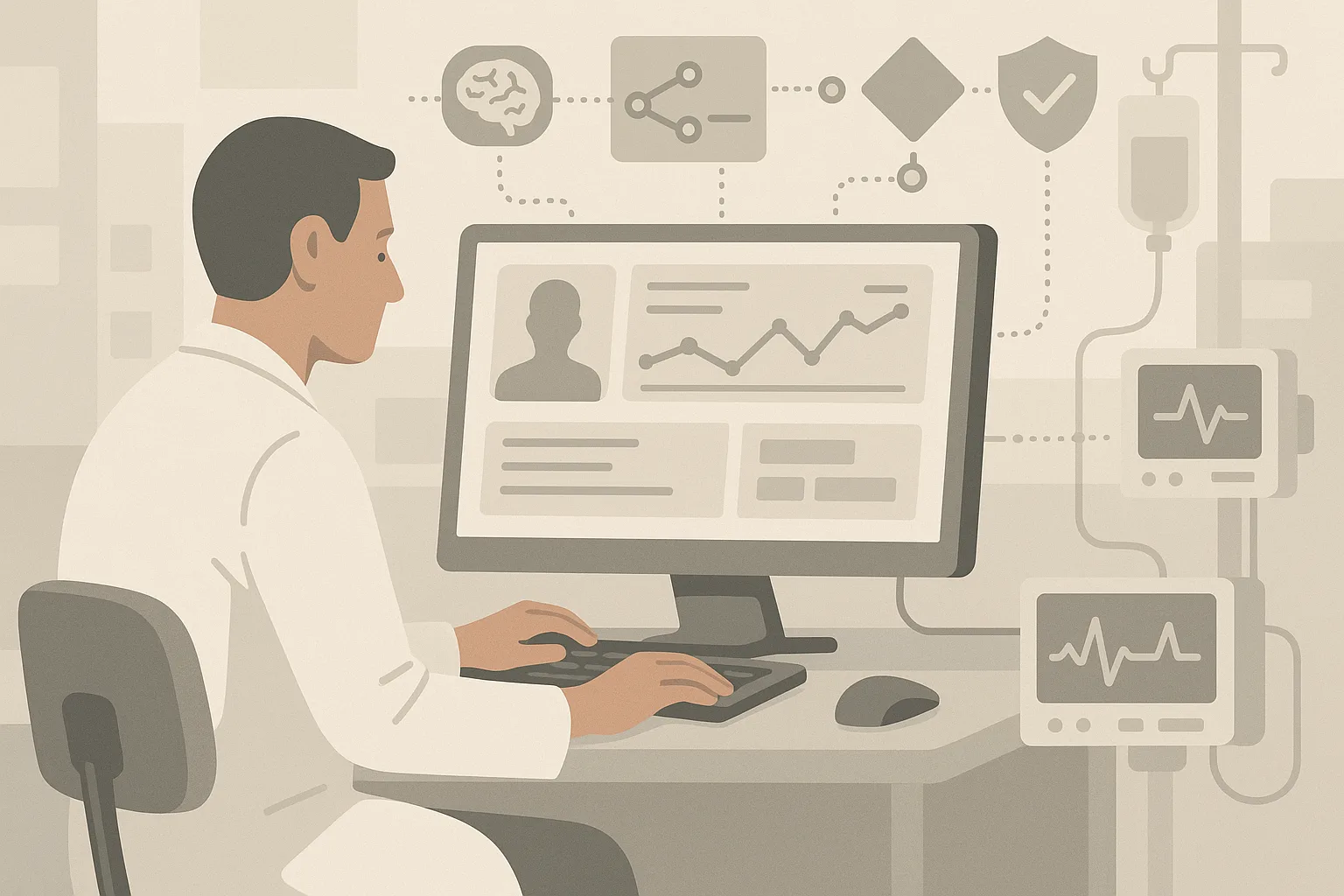
AI-enabled digital health software and Software as a Medical Device (SaMD) are moving from pilots to operational deployments—but success depends less on model novelty and more on evidence, workflow fit, and governance across the healthcare IT stack.
R
ResearchX Editorial Team
Healthcare & Medical Devices Research
AI Digital Health & SaMD: Market Signals, Technical Requirements, and Adoption Pathways in Healthcare IT content
Executive overview
AI digital health and Software as a Medical Device (SaMD) refer to software products that use algorithmic decision support—often machine learning—to inform diagnosis, triage, monitoring, or therapy, with SaMD specifically intended for medical purposes and subject to medical-device oversight. The category matters because it sits directly on clinical decision pathways, where performance, safety, and accountability requirements are materially higher than in administrative automation.
What is changing is the center of gravity: buyers are increasingly evaluating AI SaMD as an end-to-end product (data inputs → model behavior → user experience → clinical workflow → post-market monitoring), not a model demo. Procurement and adoption are being shaped by integration into EHRs and imaging systems, human factors (how the recommendation is presented), and governance practices such as model monitoring and change control when models are updated.
The most important market signals are: (1) a shift from one-off point solutions to platform-like approaches with shared data, identity, and monitoring; (2) increasing emphasis on real-world performance in the target population and setting; (3) enterprise risk management requirements (privacy, cybersecurity, auditability) becoming gating factors; and (4) greater scrutiny of claims, labeling, and intended use—especially where tools influence diagnoses, triage priority, or treatment decisions.
What counts as AI digital health vs. SaMD in practice
AI digital health is a broad umbrella spanning consumer-grade wellness tools, clinical decision support, and operational software. SaMD is narrower: software intended to diagnose, prevent, monitor, treat, or alleviate disease (or otherwise meet a medical-device definition), where the software itself is the medical device rather than being embedded in hardware.
In real procurement and deployment, the line often depends on intended use, claims, and how outputs are used. A risk score used to prioritize a patient list for outreach may be treated differently from a tool that identifies suspected stroke on imaging for clinician action. This distinction shapes evidence expectations, regulatory obligations, and internal hospital governance—especially for updates, performance drift, and incident management.
Key Market Signal
The adoption bottleneck for AI SaMD is increasingly “productization” and governance—interoperability, evidence in the target workflow, monitoring, and change control—rather than raw model accuracy in a benchmark dataset.
Technology landscape: from model performance to system performance
AI SaMD performance is best understood as system performance, not just model metrics. Data quality, workflow timing, user interface, alert fatigue, and clinical context can materially change outcomes. As a result, vendors that package model behavior with robust data pipelines, audit logs, and clear user interaction patterns are typically better positioned for enterprise deployment.
Core AI modalities and where they fit
Imaging AI (radiology, cardiology, pathology): Often deployed as detection/triage/quantification tools integrated into PACS/VNA and reporting workflows.
Signal and waveform analytics (ECG, EEG, PPG, respiratory): Used for arrhythmia flags, event detection, and trend interpretation when paired with validated devices and clean acquisition.
NLP and clinical language understanding: Applied to documentation assistance and extraction; when used to drive clinical decisions, it increases the need for traceability and error handling.
Multimodal risk prediction: Combines labs, vitals, comorbidities, and utilization history to predict deterioration or readmission risk; value depends on actionable pathways, not just prediction.
MLOps for regulated or high-stakes clinical settings
In healthcare IT environments, the operational layer around the model often determines scalability. Health systems increasingly expect versioning, audit trails, performance monitoring by site and cohort, and controlled rollouts. This is especially important when models are updated, when upstream data sources change (EHR fields, device firmware, lab codes), or when a vendor expands intended use to new populations.
Data lineage and provenance: Clear mapping from source systems to model inputs, with handling for missingness and coding changes.
Model/version governance: Documented versioning, rollback, and release notes aligned to the product’s intended use and risk profile.
Monitoring for drift and outliers: Ongoing checks on input distributions and output behavior; escalation routes when performance may degrade.
Auditability and explainability fit-for-purpose: Not every model needs full interpretability, but clinicians and risk teams need traceable rationale and limitations.
Fail-safe and fallback modes: Defined behavior when data are incomplete, interfaces fail, or confidence is low.
Evidence, validation, and trust: what buyers look for
Evidence requirements for AI SaMD are converging on a pragmatic question: does the tool improve decisions and outcomes in the setting where it will be used, without creating unacceptable new risks? Buyers often look beyond headline sensitivity/specificity to study design, comparators, generalizability, and whether performance holds across subgroups and real-world workflows.
For health systems, trust is built through transparent labeling (intended use, limitations, and required inputs), a clear accountability model (who acts on outputs and when), and robust post-deployment monitoring. For payers and value-based care organizations, evidence often needs to connect to measurable operational outcomes—reduced time-to-intervention, fewer preventable escalations, or improved pathway adherence—while acknowledging confounders in real-world environments.
Evidence and assurance checklist for AI SaMD procurement
Evidence and assurance checklist for AI SaMD procurement
Domain
What evaluators typically ask
Why it matters operationally
Clinical validity
Population, setting, comparator, and performance by key cohorts
Reduces risk of degraded performance when deployed outside the original dataset
Clinical utility
Whether outputs change decisions and enable timely action pathways
A high-performing model can still fail if no one acts on it
Safety and risk controls
Known failure modes, confidence handling, escalation and fallback behavior
Limits harm from false positives/negatives and workflow disruptions
Workflow integration
How it fits EHR/PACS, alert routing, documentation, and staffing
Determines adoption, adherence, and clinician burden
Controls drift and supports continuous quality management
Security and privacy
Data access model, encryption, logging, identity, hosting model
Meets enterprise requirements and reduces breach/operational risk
Adoption drivers in healthcare IT
Adoption tends to accelerate where AI SaMD directly addresses high-friction clinical workflows with measurable time sensitivity—such as imaging triage, deterioration detection, or resource prioritization—especially when it can be embedded into existing systems. Health systems also pursue AI tools to improve standardization of care pathways and reduce unwarranted variation, provided the tool’s recommendations are aligned with local protocols.
Operational pressure and staffing constraints: Tools that reduce manual review or prioritize worklists can show faster time-to-value.
Higher acuity care pathways: Early warning and triage use cases are attractive where delays meaningfully affect outcomes and costs.
Digital infrastructure maturity: Sites with stronger integration capabilities and data governance can deploy faster.
Shift toward continuous care models: RPM programs and home-based care create demand for scalable risk stratification and escalation logic.
Enterprise appetite for standardization: AI that supports protocol adherence may be compelling when aligned with clinical leadership.
Market challenges and restraints
Despite strong interest, AI SaMD commercialization is constrained by integration cost, governance burden, and the need for workflow change management. Many solutions fail to cross the “last mile” from a technically sound algorithm to a dependable clinical product that clinicians will trust and use consistently.
Interoperability gaps: Mapping EHR data elements, imaging formats, and device feeds is often more complex than anticipated.
Workflow and alert fatigue: Poorly tuned alerts can increase burden and erode trust, even when accuracy is acceptable.
Generalizability and bias concerns: Performance may vary across sites, scanners, protocols, and patient subgroups; mitigations require measurement and governance.
Liability and accountability ambiguity: Unclear responsibility for acting on outputs can slow adoption.
Cybersecurity and data access constraints: Clinical AI requires privileged data access; enterprise security reviews can be lengthy.
Update management: Continuous improvement must be balanced with controlled change in regulated or high-stakes workflows.
Clinical and operational use cases where AI SaMD is gaining traction
Use case attractiveness usually depends on three factors: (1) data availability and reliability; (2) clear actionability (what happens when the tool flags risk); and (3) alignment with existing reimbursement or care delivery incentives. In practice, the strongest candidates pair algorithmic outputs with defined response pathways and measurable service-level expectations.
Imaging triage and quantitative decision support
Imaging AI is often used to triage urgent findings, prioritize worklists, and provide measurements that reduce variability. Value is highest when outputs are presented natively in the radiologist workflow and when downstream communication pathways (e.g., critical results) are well defined. Sites evaluate not only detection performance but also integration with PACS, reporting, and quality assurance processes.
Deterioration detection and inpatient monitoring
AI models that synthesize vitals, labs, and clinical context aim to identify deterioration earlier than traditional scoring approaches. Operational success depends on well-designed escalation policies, staffing to respond, and monitoring of false alarm rates. Without a response model, earlier detection can simply shift workload rather than improve outcomes.
Remote patient monitoring triage and escalation
In RPM, AI is commonly used to prioritize patient outreach by identifying patterns that warrant clinician review. Because home data can be noisy and adherence variable, buyers focus on robustness to missing or inconsistent readings and on whether the triage logic reduces burden without missing clinically meaningful events. Integration into care management tools and documentation workflows is a frequent requirement.
Clinical documentation and decision support boundaries
NLP-assisted documentation and summarization can improve efficiency, but when such tools move from drafting notes to recommending diagnoses or treatments, they enter higher-stakes territory. Health systems increasingly delineate “assistive” functions (drafting, extraction) from “directive” functions (diagnosis/treatment suggestions) and apply stricter validation and oversight to the latter.
Interoperability and deployment models
AI SaMD rarely operates standalone; it lives inside the healthcare IT ecosystem. Integration patterns commonly include EHR-embedded decision support, PACS/VNA integration for imaging, and middleware that orchestrates data feeds, identity, and auditing. The deployment model—cloud, on-prem, or hybrid—often follows data residency, latency, and cybersecurity requirements rather than vendor preference.
EHR integration: Contextual launch, in-workflow alerts, and structured documentation are common requirements for clinician adoption.
Imaging integration: DICOM routing, study selection logic, and result display within PACS viewers affect real-world usability.
Device and monitoring feeds: Reliable ingestion from bedside monitors or wearables depends on interface stability and governance.
Identity, consent, and access control: Role-based access and least-privilege patterns matter for clinical risk and compliance.
Observability and auditing: Logs for inputs, outputs, user actions, and downtime support quality management and incident review.
Regulatory and quality management considerations (high level)
Because SaMD can influence diagnosis and treatment, regulatory and quality management expectations are central to market adoption. While requirements vary by jurisdiction and intended use, common themes include risk management, software lifecycle controls, validation appropriate to claims, cybersecurity, and post-market surveillance or monitoring.
A practical commercial implication is that vendors should plan for documentation and controlled change management early, not as an afterthought. For buyers, aligning AI governance with existing clinical quality, patient safety, and IT change advisory processes can reduce friction and clarify accountability.
Competitive landscape: how solutions differentiate
The AI SaMD landscape includes imaging-focused vendors, digital therapeutics and monitoring companies, and broader healthcare IT vendors adding AI-driven features. Differentiation increasingly centers on deployment readiness and enterprise fit—interoperability, implementation playbooks, and monitoring—rather than isolated algorithmic claims.
Workflow-native experiences: Tools embedded in EHR/PACS with minimal context switching tend to see stronger adoption.
Evidence packaging: Clear labeling, validation summaries, and limitations communicated for clinical governance review.
Operational tooling: Monitoring dashboards, cohort performance checks, and administrative controls for rollouts and alerts.
Implementation support: Integration accelerators, testing protocols, and change-management materials can reduce time-to-value.
Portfolio strategy: Vendors offering multiple related modules may benefit from shared integration and governance, if modules are clinically coherent.
Strategic implications for stakeholders
For device and SaMD manufacturers
Design the product around workflow constraints: specify who sees outputs, where, and what action is expected.
Treat integration as a first-class feature: interfaces, logging, and monitoring are often decisive in enterprise selection.
Plan for lifecycle governance: versioning, drift monitoring, and update policies should be productized, not bespoke.
Build evidence that reflects real deployment: include multi-site variability, subgroup performance, and operational endpoints when feasible.
For health systems and provider organizations
Create an AI intake and governance pathway: align clinical, IT, security, and quality teams on evaluation criteria.
Demand clarity on intended use and limitations: ensure outputs match local protocols and scope of practice.
Measure impact beyond accuracy: track workflow metrics (turnaround time, response compliance) and safety signals (false alert burden).
Plan staffing and escalation: deterioration and RPM triage only work if response capacity is defined and resourced.
For payers, employers, and value-based care organizations
Prioritize actionable programs: tools should connect to care management interventions, not just risk stratification.
Evaluate data requirements and interoperability early: feasibility often drives ROI more than model performance.
Assess governance for updates and monitoring: especially for solutions that can change behavior over time.
Future outlook: what to watch
Near-term evolution is likely to emphasize operational maturity: better integration patterns, stronger monitoring, and clearer product boundaries for high-stakes recommendations. Expect increasing focus on real-world performance management, including how tools behave across sites and over time as practice patterns and data sources evolve.
Consolidation toward platforms: shared data ingestion, identity, and monitoring layers may reduce friction for multi-module AI portfolios.
Richer multimodal models: combining imaging, signals, and EHR context may expand use cases, but will increase validation complexity.
More rigorous governance expectations: health systems are likely to formalize AI oversight similar to other patient safety programs.
Shift from “AI as feature” to “AI as service level”: vendors may be judged on uptime, alert quality, and monitoring responsiveness as much as on model metrics.
Frequently Asked Questions
AI digital health is a broad category of software using AI in health contexts, including operational tools. SaMD is a subset where the software itself is intended for a medical purpose (e.g., diagnosis, monitoring, treatment support) and is evaluated under medical-device expectations tied to intended use and risk.
Because real-world impact depends on whether clinicians can see, trust, and act on outputs inside their existing EHR/PACS and care pathways. Poor integration increases alert fatigue, context switching, and implementation cost, which can negate the benefit of strong model performance.
Common blockers include interoperability work that is larger than expected, unclear accountability for acting on outputs, insufficient change management, and lack of post-deployment monitoring for drift and false alert burden.
They look for validation in the target population and setting, clarity on intended use and limitations, and whether outputs lead to actionable decisions with defined response pathways. Safety controls, monitoring plans, and update governance also factor heavily.
AI SaMD is typically deployed through EHR-embedded decision support, PACS/VNA integrations for imaging, or middleware that orchestrates data feeds and auditing. Cloud, on-prem, and hybrid choices are usually driven by security, latency, and data governance requirements.
Model behavior can change when input data distributions shift, upstream systems change, or practice patterns evolve. Monitoring helps detect drift, manage incidents, and support controlled updates aligned with clinical risk management.
It depends on intended use and how outputs are used. Assistive functions like drafting or extracting information may be treated differently than tools that provide diagnostic or treatment recommendations, which generally require stricter validation and oversight.
AI-enabled digital health and Software as a Medical Device (SaMD) are moving from pilot programs to operational deployments—driven by clinical capacity constraints, expanding data availability, and maturing regulatory expectations. This article maps the technology landscape, adoption drivers, constraints, and go-to-market implications for healthcare and medtech stakeholders.
AI-enabled SaMD is increasingly bought and governed as a managed clinical capability—validation, workflow fit, monitoring, and accountability are becoming the differentiators.
MedInsight (ResearchX) has published expanded research coverage examining AI-enabled digital health software and Software as a Medical Device (SaMD), with a focus on clinical adoption drivers, regulatory considerations, and commercialization dynamics across care settings.
The AI-based stroke detection and triage platforms market comprises software that analyzes medical imaging and related clinical data to accelerate identification, notification, triage and workflow coordination for patients with suspected acute stroke. Platforms increasingly support large-vessel occlusion detection, non-contrast CT assessment, CT angiography, CT perfusion and communication between emergency, radiology and neurovascular teams. Commercial growth is supported by the urgent need to shorten stroke workflows, expanding AI adoption in emergency…
CAGR
+22%
Forecast period
2026-2036
Need a Market View Built for Your Decision?
Get custom research on any market in the healthcare ecosystem, tailored to your business question. An analyst will scope the work, agree the method with you and deliver a model you can interrogate.
 Blog
Blog