MedInsight Expands Research Coverage on Drug Delivery & Combination Products
MedInsight (ResearchX) has published expanded research coverage on drug delivery and combination products, focusing on device-led differentiation, regulatory and quality pathways, and evolving manufacturing and supply-chain requirements across key delivery modalities.
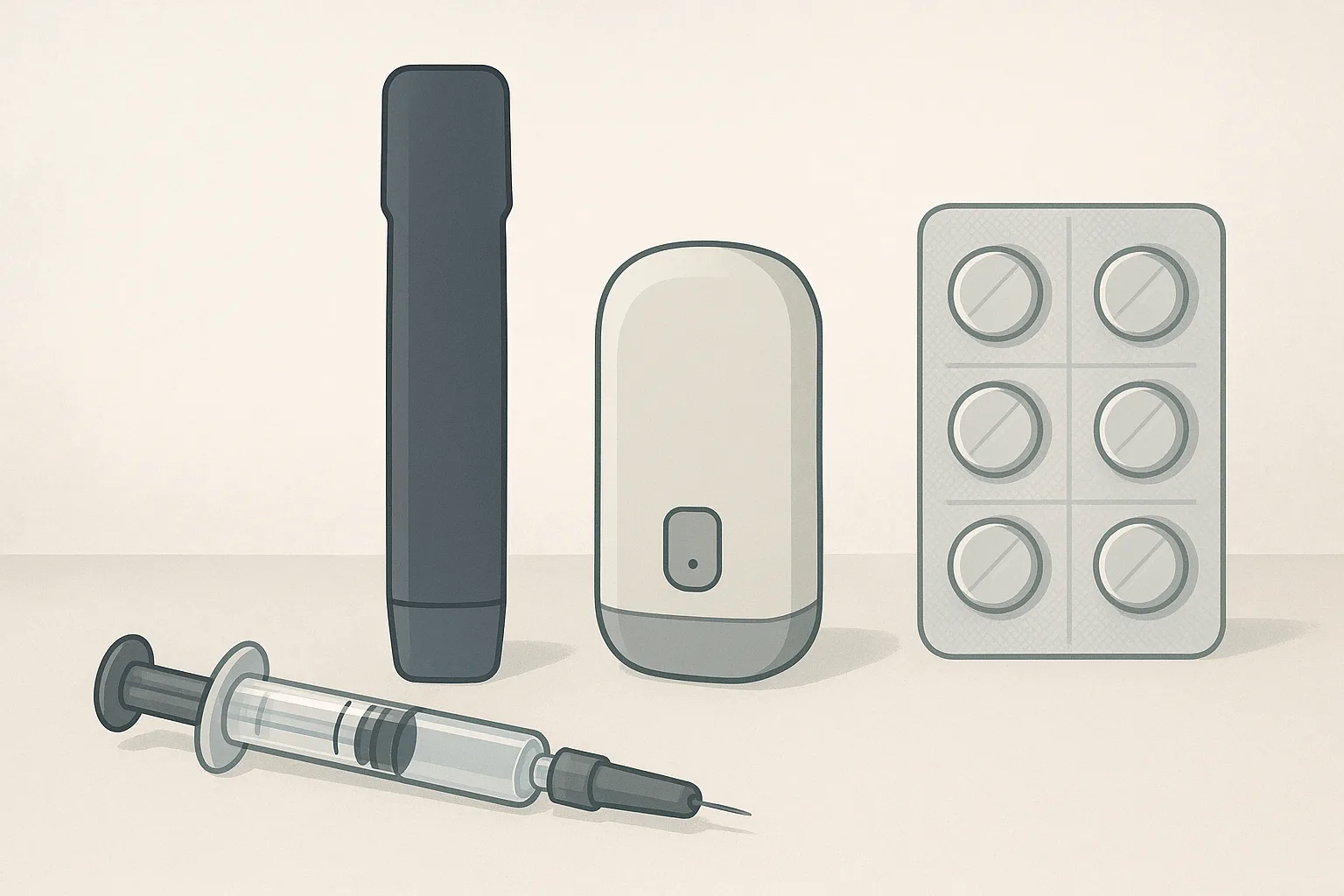
MedInsight Expands Research Coverage on Drug Delivery & Combination Products content
Coverage Announcement
MedInsight, the healthcare and medical-devices market research platform by ResearchX, today announced expanded research coverage focused on Drug Delivery & Combination Products. The new coverage is designed to support manufacturers, pharmaceutical and biotech teams, device developers, CDMOs, and investors assessing device-enabled therapeutics, lifecycle management strategies, and technology selection across major delivery formats.
Drug delivery and combination products sit at the intersection of pharmaceuticals, medical devices, human factors engineering, and increasingly software-enabled connectivity. MedInsight’s latest coverage examines how performance requirements (dose accuracy, usability, reliability, cold-chain tolerance, and container-closure integrity) translate into design controls, verification and validation, and post-market change management—often across complex, multi-party supply chains.
The expanded research is structured to help readers understand where innovation is occurring, which capability gaps are most likely to constrain scale-up, and how regulatory and quality expectations shape commercialization pathways for drug-device combination products.
Key Highlights of the New Coverage
- Maps major delivery modalities—injectables (including self-injection), inhalation, transdermal, nasal, ocular, and implantable delivery—through a combination-product lens
- Reviews end-to-end lifecycle considerations from early device selection and feasibility through design controls, human factors, and technical transfer
- Tracks regulatory and quality-system themes relevant to combination products, including change control, complaint handling, and cross-entity responsibilities
- Assesses manufacturing readiness topics such as automation, assembly/packaging integration, container-closure systems, and cold-chain constraints
- Highlights procurement and partnering considerations, including CDMO selection criteria and supplier qualification risks for critical components
What MedInsight’s Drug Delivery & Combination Products Coverage Includes
MedInsight’s expanded coverage provides an industry-facing view of technology and commercialization considerations for combination products where a therapeutic is co-packaged or integrated with a delivery device. The research emphasizes practical decision points that influence time-to-market and total lifecycle cost—particularly when device performance becomes a differentiator for adherence, safety, and patient experience.
- Delivery technology landscape across key modalities and common device architectures (e.g., disposable vs. reusable platforms, on-body delivery concepts, pen and autoinjector formats, inhalation device categories, transdermal system types)
- Design and development workflow considerations, including design inputs tied to dosing performance, reliability, use environment, and storage conditions
- Human factors and usability themes for self-administration and caregiver workflows, including mitigation of use-related risks and training burden
- Combination-product quality and compliance considerations, including device master records, traceability expectations, and alignment across pharmaceutical and device quality systems
- Manufacturing and scale-up considerations, including assembly/packaging strategies, process validation themes, and quality release implications when drug and device supply chains intersect
- Supply-chain and sourcing risk assessment for critical parts (primary containers, elastomers, needles, springs, adhesives, electronics, and sterile barriers), including supplier change management and second-sourcing feasibility
- Commercial and access-related factors that influence device selection, such as patient support programs, distribution channels, and serviceability for connected/advanced devices
- Post-market lifecycle management considerations, including complaint trending, field performance monitoring, and the impact of design or supplier changes over long product lifecycles
Because combination products frequently involve multiple responsible entities, the coverage also examines where interface risks tend to emerge—such as requirements translation between drug formulation constraints and device tolerances, or packaging decisions that affect usability, labeling, and distribution resilience.
Illustrative Research Lens by Combination-Product Type
| Combination-product context | What organizations typically optimize for | Common cross-functional dependencies |
|---|---|---|
| Pre-filled, single-use injection systems | Consistency of delivered dose, robustness in transport/storage, intuitive self-administration | Container-closure performance, fill-finish compatibility, device assembly, labeling and IFU alignment |
| Reusable delivery platforms with replaceable drug containers | Long-term reliability, serviceability, patient training and adherence support | Maintenance of device performance across cartridge lots, software/firmware controls where applicable, field support model |
| On-body and wearable delivery concepts | Hands-free administration, extended dosing profiles, patient comfort | Adhesive/skin interaction, occlusion detection, power management, packaging and cold-chain fit |
| Inhalation-based combination products | Dose delivery repeatability and patient technique tolerance | Device airflow characteristics, formulation aerosolization behavior, contamination control, patient training |
| Transdermal and implantable delivery systems | Sustained delivery and long wear times; biocompatibility and stability | Materials selection, sterilization effects, packaging barrier performance, clinical workflow integration |
Industry Context: Why Delivery and Combination Products Are Under Increased Scrutiny
Across multiple therapeutic areas, delivery devices are increasingly used to differentiate otherwise comparable molecules and to reduce administration complexity outside traditional clinical settings. As more therapies move toward self-administration, at-home initiation, or decentralized care pathways, product teams are elevating usability, reliability, and end-to-end patient experience as core design inputs rather than downstream packaging decisions.
At the same time, combination products introduce a layered risk profile: the therapeutic, device constituents, packaging system, and (in some cases) connectivity features must perform together as a system. MedInsight’s research highlights how this systems perspective affects development governance, including design controls, supplier oversight, and validation planning across organizations with different legacy quality practices.
Manufacturing and supply dynamics remain central to risk management. Capacity constraints for certain components, qualification timelines for new suppliers, and the complexity of integrating fill-finish operations with device assembly can materially influence commercialization schedules. The coverage discusses how organizations evaluate make-versus-buy tradeoffs, automation readiness, and the operational implications of product configuration decisions (for example, prefilled formats versus separate drug and device components).
Why it matters
For many therapies, delivery strategy is no longer a packaging afterthought—it is a product-defining element that can influence adherence, safety, differentiation, and lifecycle resilience. Understanding combination-product constraints early can reduce late-stage redesign and accelerate scalable manufacturing plans.
Strategic Significance for Manufacturers, CDMOs, and Investors
For manufacturers and developers, MedInsight’s Drug Delivery & Combination Products coverage is intended to support early, defensible decisions around platform selection, usability strategy, and manufacturing architecture—decisions that often become difficult to change after pivotal development or scale-up commitments. The research frames where technical and organizational interfaces commonly create schedule risk, such as requirements handoffs, component qualification, and packaging configurations that affect distribution and user steps.
For CDMOs and suppliers, the coverage outlines where customers are tightening expectations—particularly on traceability, change notification discipline, and evidence packages that support comparability when materials or processes evolve. For investors and corporate development teams, the research provides a structured view of technology differentiation drivers and operational constraints that can shape risk assessments, partnership strategies, and timelines for value realization.
Need a Market View Built for Your Decision?
Get custom research on any market in the healthcare ecosystem, tailored to your business question. An analyst will scope the work, agree the method with you and deliver a model you can interrogate.
- Named analyst on every engagement
- Scoped in 48 hours
- Assumptions shared, not hidden
- Quarterly refresh included